Commercial Glass Specifications for Hot Climates
Designing commercial buildings in hot climates like Houston requires careful balance between daylighting and solar heat management. Large glass facades are excellent for natural light, but can create massive heat gain if not engineered correctly. Commercial energy codes (such as ASHRAE 90.1) mandate strict limits on heat transfer.
Glazing Science & Storm Engineering
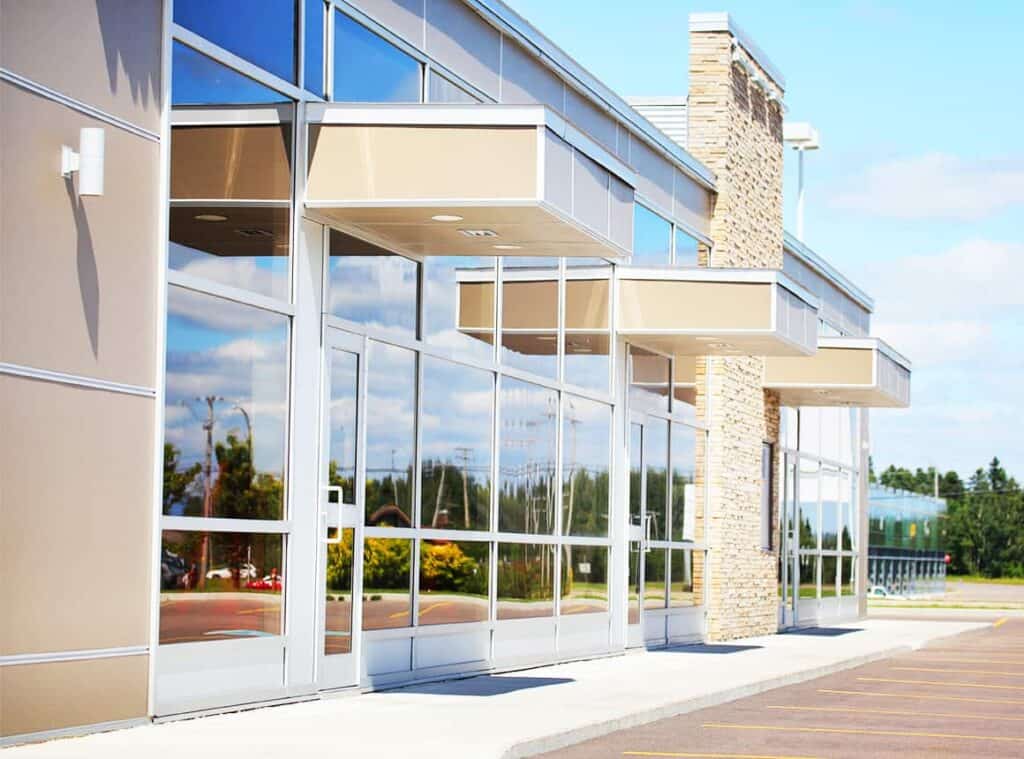
For commercial projects, we specify high-performance spectrally selective glass. These systems filter out infrared heat while allowing visible light to pass. The performance is measured by the Solar Heat Gain Coefficient (SHGC) and U-Factor. Using thermal-break aluminum frames and dual-pane Low-E glass units, we help developers lower building operating costs and meet municipal energy codes.
Weather Protection Priorities:
- Wind Load Engineering: Framing systems engineered to resist high negative and positive pressures.
- Solar Heat Control: Microscopic metal oxide coatings that bounce away solar heat.
- Acoustic Isolation: PVB membranes that dampen noise from traffic and severe wind.